Electric chopper bike for adults: three models compared
Three US listings, one practical comparison, and the questions their spec sheets leave open.
The short answer
An electric chopper bike for adults can be a bicycle-style cruiser or a much faster machine with the same look. Biria lists a 500 W, 20 mph Class 2 model; Micargi lists an 800 W, 28 mph Severus DTS; BIGNIU advertises 38+ mph for its BG-X Pro. Compare the exact configuration and local riding rules before choosing. These are maker specifications, not road-test results.
Key takeaways
- Biria calls its Electric Chopper a Class 2 e-bike with a 500 W motor and 20 mph maximum speed, but its current product listing shows sold out.
- Micargi's Severus DTS lists an 800 W motor and 28 mph top speed. Ask for written motor and assist details before assuming it qualifies as a bicycle on your route.
- BIGNIU's BG-X Pro advertises 38+ mph and conflicting 330 lb and 350 lb load figures on one page. Resolve both its vehicle category and capacity before ordering.
- Battery labels yield 768, 960 and 1,404 Wh respectively. These are nominal calculations, not tested range.
Shopping for an electric chopper bike for adults starts with a confusing result page. A 20 mph bicycle-style cruiser may appear beside a machine advertised at more than 38 mph. This comparison uses three manufacturers’ US listings, checked November 2, 2026, to show what each page establishes and what you still need to ask. We have not ridden or tested these bikes.
Which three electric chopper bikes are worth comparing?
Compare the Biria Electric Chopper, Micargi Severus DTS and BIGNIU BG-X Pro as three different kinds of listing, not a ranked podium. Biria describes a Class 2 bicycle-style chopper; Micargi describes a faster stretch cruiser; BIGNIU advertises a much faster chopper-style machine. Stock and specifications can change, so confirm the current version with the seller.
| Model | Maker’s motor and speed claim | Battery label |
|---|---|---|
| Biria Electric Chopper | 500 W; up to 20 mph; maker calls it Class 2 | 48 V, 16 Ah |
| Micargi Severus DTS | 800 W, up to 1,000 W peak; up to 28 mph | 48 V, 20 Ah |
| BIGNIU BG-X Pro | 3,000 W peak; 38+ mph | 52 V, 27 Ah |
The table reports advertising claims, not independently measured speed or a legal ruling. Biria’s page currently says sold out; ask a dealer about availability if that model interests you. For help judging the stretched frame and riding position, use our separate chopper style electric bike fit guide.
What does each listing tell an adult buyer?
Biria gives the most direct bicycle-class claim in this group: its page says Class 2, pedal assist and throttle, with a 20 mph maximum. It also lists hydraulic disc brakes, 24 by 3 inch tires and a 73 lb bike weight. Those figures still cannot tell you whether the saddle-to-pedal distance suits your legs or whether the dealer can supply the bike. Ask for a test ride and current inventory.
Micargi’s Severus DTS has the more stretched layout. Its listing gives a 92.15 lb bike weight, a 220.46 lb maximum payload, 26 by 3 inch front and 26 by 4 inch rear tires, and pedal assist using speed and torque sensors. The page says 800 W with 1,000 W peak, yet does not give enough information to establish how the exact bike is classified where you ride. See continuous versus peak motor power and request the current build sheet, assist cut-off and throttle details.
BIGNIU’s BG-X Pro is a useful boundary example, not a bicycle-class recommendation. Its page advertises 38+ mph, an 80 inch overall length and 54.3 inch wheelbase. It says 330 lb maximum load in one feature list and 350 lb elsewhere on the same page. Get the applicable load limit and vehicle category in writing. Its speed claim is a reason to check licensing, registration and permitted roads with your local authority before paying.
How do the batteries compare?
On the makers’ labels, Biria’s battery calculates to 768 Wh, Micargi’s to 960 Wh and BIGNIU’s to 1,404 Wh. We multiplied stated volts by amp-hours. Biria’s page prints “768 AH” beside its 48 V, 16 Ah battery; that unit is inconsistent with the calculation, so we use 768 Wh as calculated nominal energy, not the page’s printed unit. None of these figures is measured usable capacity or miles per charge.
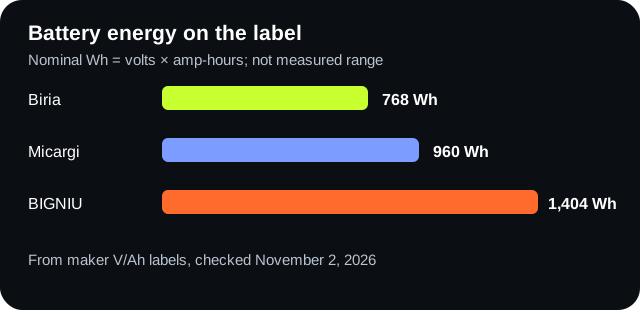
Estimate your own trip with our e-bike range calculator and read how e-bike range changes with speed, hills and load. A faster bike can use more energy per mile even with a larger battery.
Which fit and ownership questions should you ask?
Ask about the exact bike’s load limit, pedal reach, complete length and local service before comparing claimed range. An adult rider’s payload capacity includes the rider and anything carried on the bike; it is different from the bike’s own weight. See our payload capacity glossary for a worked example. BIGNIU’s conflicting load numbers and Micargi’s 220.46 lb claim make this a real purchasing question, not a box to tick.
-
Record the exact build
Save the model, variant, battery label and seller's current spec sheet. Ask which motor number is continuous and where assistance ends.
-
Test the fit
Pedal and turn at low speed on the exact bike. Measure its length, wheelbase and seat-to-pedal reach for your storage space.
-
Confirm the route
Check the bike's documented category with your state or local authority and the manager of any path you plan to use.
-
Confirm support
Ask who will service the brakes and electrical parts nearby, and read the return terms before ordering.
What mistakes should you avoid?
Do not use the biggest battery or top-speed number as a proxy for suitability. The three bikes differ in mass, advertised speed and unresolved legal questions. Do not treat a maker’s rider-height range or product photo as a fit test. A low seat can still put the pedals too far forward for comfortable pedaling.
Do not treat “peak W” as the motor’s sustained rating, or a claimed top speed as the assist cut-off speed. If the seller cannot give the values required by your local rules, keep comparing. Our chopper style electric bike guide covers the geometry checks in more detail.
Where this comparison comes from: all model figures are manufacturer claims on the three linked US product pages, checked November 2, 2026. Battery Wh figures are our arithmetic (48 × 16, 48 × 20 and 52 × 27). The federal definition comes from the CPSC. We have no hands-on tests, current dealer inventory verification or local legal determination for these models.
Frequently asked questions
What is the best electric chopper bike for adults?
There is no single best model from specifications alone. Biria's listed 20 mph Class 2 bike is the clearest bicycle-style candidate in this comparison, subject to local rules and current availability. Micargi and BIGNIU advertise higher speeds. Confirm the exact build, riding category, fit, service support and a test ride before spending money.
Are electric chopper bikes legal on bike paths?
The chopper shape does not determine path access. The bike's motor, assisted speed, throttle and local rules do. The US federal consumer-product definition covers a low-speed electric bicycle under specified conditions, but state and trail authorities set riding access. Ask the maker for the exact motor rating and assist cut-off, then check the authority for your route.
How much battery does an adult electric chopper bike need?
Start with your route and charging opportunities, then compare battery energy in watt-hours. Biria, Micargi and BIGNIU battery labels calculate to 768, 960 and 1,404 Wh, but those numbers do not predict mileage by themselves. Speed, hills, temperature, tire pressure and total load affect real range. Leave enough margin for the return trip.
Can a heavy adult ride an electric chopper bike?
Check the maker's maximum payload for the exact model and include your clothing, bags and accessories in that load. Micargi lists about 220 lb for the Severus DTS. BIGNIU gives both 330 lb and 350 lb for the BG-X Pro on one page, so request a written answer. A test ride also checks pedal and handlebar reach.
Sources & references
We cite primary sources wherever possible: standards bodies, regulators, manufacturers and peer-reviewed research. See our editorial policy.